




Display Props for Retail Stores: Types, Benefits, Uses, Selection & Ideas
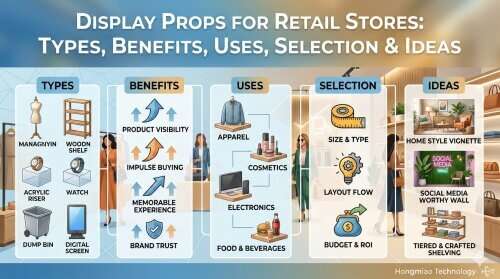
Display props for retail stores are the secret tools that make shopping exciting and organized for every person who walks into a shop. These items help sellers show their products in a way that looks beautiful and catches the eye of a buyer immediately. In the world of visual merchandising, these props act as the foundation for creating a professional atmosphere. Retailers use things like mannequins, colorful stands, and glass boxes to create a scene that feels real and inviting. These props are not just for decoration but they are a main part of retail strategy which helps in selling more products by making them easy to see and touch. Using high-quality display materials ensures that the store layout stays fresh and helps the business grow by turning visitors into loyal customers through a great shopping atmosphere.
A successful retail environment depends on how well a brand can communicate its value to the people on the street. When a store uses the right props for window display , it tells a story about the brand and makes the items look more valuable to anyone passing by. These tools help in defining the theme of the store, whether it is a luxury boutique or a simple grocery shop. By lifting products to eye level and using creative lighting, props help in highlighting the best features of any merchandise. Original facts show that stores with well-planned displays see much higher foot traffic because people feel naturally drawn to organized and aesthetically pleasing environments.
Choosing the correct props also involves understanding consumer psychology and how people move through a physical space. Proper selection of materials like durable wood, sleek metal, or clear acrylic can change the entire mood of a retail business. When products are placed on stable and attractive pedestals, it increases the perceived value of the goods. This introduction to retail props will help you understand how to use these essential tools to improve your store layout, attract more shoppers, and ultimately increase your profit margins. Every small detail, from a sign holder to a full-sized mannequin, plays a vital role in building a memorable brand identity that stands out in a crowded market.
1. What Are Display Props and Why Are They Essential for Retail Stores?
Display props are special objects that shop owners use to hold, show, or decorate their products. Think of them as the supporting actors in a movie where your products are the main stars. These props belong to the world of visual merchandising. Their main job is to grab the attention of a customer and make them stop to look at what is being sold.
For example, if you go to a clothing store, you will see mannequins. These are human-like figures that wear the clothes so you can see how they look on a person. Other common examples include wooden shelves, metal racks, small product trays, and plastic sign holders. All these items together create a display. They help organize the store so that it does not look messy. Without these props, products would just sit on the floor or in boxes, and nobody would want to buy them.
Pro Tip for Retail Success
Standard fixtures handle the basics but many global brands now lean towards custom window display props for branding to create a truly unique storefront. Tailoring objects to match a specific seasonal theme or brand story does not just attract passersby. It turns your window into a high-conversion marketing tool. Choosing tailored solutions ensures that your retail space reflects premium quality and captures the exact mood of your latest collection.
2. 10 Key Benefits of Using Creative Display Props in Modern Retail Stores
Using display props gives many advantages to a retail business. It is not just about making the store look pretty. It is about how the customer feels and how the products perform in the market. Here are the main benefits of using these tools:
2.1. Product Visibility and Accessibility
Props lift the products up from the ground and put them at eye level. When a product is at eye level, a customer sees it much faster. Good props like tiered stands or wall racks also make it easy for people to reach out and touch the item. This physical connection often leads to a quick sale because the customer feels the quality of the product.
2.2. Influence Purchasing Decisions and Impulse Buying
Sometimes people enter a store just to look around without a plan. An eye-catching display with bright props can sway their mind. Captivating displays act like a silent salesman that convinces a person to buy something. This is how props help in boosting impulse buying, where a customer picks up an item simply because it looked amazing on the stand.
2.3. Create a Memorable Shopping Experience
Engaging displays do more than show a product; they tell a story. When you use props to create a scene, like a beach setup for swimwear, it makes the visit unforgettable. Customers do not just remember the product, they remember the feeling of the store. This makes them want to come back again.
2.4. Enhance Brand Perception and Trust
Displays that are aligned with the brand identity reinforce trust. If a brand says it is luxury, using high-quality glass and metal props proves it to the customer. When the display looks professional, the customer feels that the brand is loyal to its quality. This builds a long-term relationship between the buyer and the seller.
2.5. Offer a Personalized Shopping Experience
Tailored displays can resonate deeply with a specific target audience. For example, a toy store using colorful and low-height props makes the experience personal for children. When a customer feels that the display was made specifically for their needs and taste, they feel more connected to the retail business.
2.6. Catch Attention with Strategic Placement
Proper positioning of props increases customer engagement. By placing a bold prop near the entrance or at the end of an aisle, you can guide where the customer looks. Strategic placement ensures that your most important or new products get the maximum attention they deserve.
2.7. Create an Emotional Connection
Props have the power to evoke feelings like joy, nostalgia, or excitement. A holiday-themed display with old-fashioned props can make a person feel nostalgic and happy. These emotions foster loyalty because the customer starts to associate your store with good feelings.
2.8. Stimulate Imaginations through Storytelling
Themed displays engage customers on a deeper level by stimulating their imagination. If you use props to show a fully set dining table, the customer starts imagining that table in their own home. This type of storytelling helps the buyer understand how the product fits into their life.
2.9. Refresh Displays to Maintain Interest
Regularly updated props keep customers intrigued. If a store looks the same for a whole year, people stop noticing the products. By refreshing the props and changing the layout, you keep the store environment fresh and exciting. This tells the customers that there is always something new to discover.
2.10. Elevate the Overall Retail Business
In the end, the strategic use of props boosts the entire brand experience. It elevates the shop from a simple place of utility to a destination for discovery. From better visibility to emotional bonding, every prop you choose helps in growing the sales and reputation of the retail store.
3. 5 Practical Uses and Common Applications of Display Props in Retail Stores
Different types of stores use different props based on what they sell. Each industry has its own way of using these tools to attract people.
3.1. Apparel and Accessories
Clothing stores rely heavily on mannequins and dress forms. These props show the fit and style of the clothes. Racks and hangers are also used to keep different sizes organized so customers can find their fit easily.
3.2. Cosmetics and Beauty
In the beauty world, products are usually small. Retailers use clear acrylic holders and small trays to keep lipsticks and creams in order. These props make the items look expensive and clean.
3.3. Electronics
Phones and laptops need sturdy stands and display counters. These props often have security wires but they allow the user to test the gadget. This hands-on experience is very important for selling electronics.
3.4. Food and Beverages
Grocery stores or bakeries use tiered stands and wooden crates. These props make the food look fresh and organic. Bottle displays are also common for showing drinks in an organized way.
3.5. Events and Pop-up Shops
Sometimes brands set up temporary stalls at trade shows. They use portable and lightweight props that are easy to carry. These props help create a professional look even in a small temporary space.
4. Understanding the Most Profitable 11 Types of Display Props for Retail Stores
Retailers use many different types of props to show their products. Choosing the right type of display can help you guide customers through your store and increase your sales. Here are the most profitable types of retail displays:
|
Display Prop Type |
Best Use For |
Key Benefit |
|
Countertop Displays |
Small items like candies or jewelry |
Grabs attention at the cash counter |
|
Modular Displays |
Seasonal sales or changing layouts |
Very flexible and easy to move |
|
Acrylic Risers |
Watches, tech, and luxury products |
Adds height to make products stand out |
|
Dump Bins |
Discounted toys or bulk snacks |
Encourages customers to find bargains |
|
Wall-Mounted Displays |
Lightweight items and shoes |
Saves floor space in small stores |
|
Display Pedestals |
High-end art or single new arrivals |
Makes a product look very valuable |
|
Display Cases |
Expensive or delicate valuables |
Protects items from dust and theft |
|
Window Displays |
Main brand story and promotions |
Attracts people from outside the store |
|
Banner Displays |
Big sale messages and branding |
Easy to read from a long distance |
|
Digital Displays |
Videos and interactive catalogs |
Keeps shoppers engaged with movement |
|
Sign Holders |
Price tags and product details |
Reduces confusion for the buyer |
|
Mannequins |
Clothing and fashion accessories |
Shows how clothes look on a real person |
4.1. Countertop Displays for Quick Sales
Countertop displays are small stands that sit on top of tables or checkout counters. These are perfect for small items like candies, lip balms, or keychains. Because they are at the checkout area, they catch the eye of a customer who is waiting to pay. This is a great way to encourage "grab-and-go" purchases without taking up much space.
4.2. Modular Displays for Easy Changes
Modular displays are like building blocks. You can change their shape or size whenever you want. These are best for stores that change their inventory often or for seasonal sales. For example, you can use hooks one day and shelves the next day. This flexibility helps you keep the store looking fresh and new for returning shoppers.
4.3. Acrylic Risers to Highlight Key Products
Acrylic risers are clear stands that lift a product up. They add height to a flat display. When you put a watch or a piece of jewelry or a bespoke custom bottle display on a riser, it looks more important and expensive. Because they are clear, they do not hide other items. They create a clean and professional look on any shelf or counter.
4.4. Dump Bins for Clearance and Bulk Items
Dump bins are large containers where you can put many items together. They are perfect for toys, snacks, or discounted products. These bins invite customers to "dig for treasure." This creates a fun experience for bargain hunters and helps the store move a lot of products quickly.
4.5. Wall-Mounted Displays to Save Space
If your store is small, you can use your walls to show products. Wall-mounted pedestals or floating shelves reclaim vertical space. These props keep the floor clear so people can walk easily. They are great for showing shoes, books, or lightweight accessories in an organized way.
4.6. Display Pedestals for a Gallery Look
A pedestal is a single tall stand that holds one special product. It makes the product look like a piece of art in a gallery. Retailers use pedestals for high-end goods or new arrivals. By isolating one item, you force the customer to slow down and look at the fine details of that product.
4.7. Secure Display Cases for Valuables
Display cases are made of glass or strong acrylic and usually have a lock. They protect expensive or delicate items from dust and theft. When a customer sees an item inside a case, they immediately feel that the item is premium and valuable. These are best for electronics and high-end jewelry.
4.8. Storytelling with Window Displays
Window displays are the first impression of your store. You can use a mix of mannequins, pedestals, and props for window display to tell a brand story. A good window display attracts people walking by and invites them to come inside. It sets the theme for the entire shopping experience.
There is a lot more to window displays than just placing a few props behind the glass. Retailers use many specific methods. From lighting and color psychology to seasonal themes, technology, and sustainability. These turn a plain window into a powerful sales tool. If you want to understand all of these methods in detail, this complete guide on how retailers use window displays walks through every technique from start to finish.
4.9. Banner Displays for Big Messages
Banners are large signs that show promotions or brand messages. You can use retractable banners or hanging signs to lead customers to a specific area of the store. They are very easy to move and are great for announcing a "Big Sale" or a "New Collection."
4.10. Digital Displays for Interactive Shopping
Digital displays are screens that play videos or show moving pictures of products. They capture attention much faster than a still sign. You can use touch-screen kiosks to give more information to the customer. This injects energy and a modern feeling into the retail environment.
4.11. Strategic Signage and Sign Holders
Signs are the simplest but most important props. Small sign holders show the price and details of a product. Hanging signs act as markers so customers do not get lost. Clear signage reduces confusion and helps the customer make a buying decision quickly.
5. Important Materials and Design Considerations for Display Props in Retail Stores
When choosing props, the material is very important. It must match the weight of the product and the style of the store.
- Wood: This material gives a warm and natural feel. It is very strong and lasts a long time.
- Metal: Metal props are great for a modern or industrial look. They are very durable and can hold heavy items like coats or electronics.
- Acrylic: This is a clear material that looks like glass but does not break easily. It is perfect for jewelry because it does not hide the product.
- Safety and Stability: You must always check if the prop is stable. A tall display should not fall over when a child touches it. Sharp edges are also a big no in retail stores.
6. 5 Expert Tips on How to Select the Right Display Props for Your Retail Stores
Selecting the right display props is a very important decision for any shop owner. If you choose the wrong prop, it can make even a high-quality product look cheap or unattractive. You must think about several factors before you spend your money on buying props in bulk or from wholesale suppliers. Here is a simple guide to help you make the best choice.
6.1. Consider Product Type and Size
The first thing you must look at is the size and type of the item you want to sell. Small items like rings, earrings, or tiny electronics need small and delicate props. You can use velvet pads, acrylic blocks, or small product trays for these. If you put a tiny ring on a huge shelf, it will get lost and no one will see it. On the other hand, large items like travel bags or heavy coats need wide and strong shelves or sturdy mannequins. The prop should always support the product but it should never be so big that it hides the product itself.
6.2. Analyze Store Layout and Traffic Flow
Your store layout tells you where the props should go. You must place your most attractive props where people walk the most. This is often called the "high-traffic area." However, you must be careful not to block the walking path. If a customer feels crowded or cannot move freely, they will leave the store quickly. Use sleek wall-mounted displays in narrow aisles and keep larger pedestals for open spaces. A good flow ensures that customers can see and touch products easily without any trouble.
6.3. Evaluate Material and Durability
The material of the prop depends on how long you want to use it. If you are setting up a permanent display, you should choose strong materials like metal or solid wood. These materials can hold heavy weight and stay in good condition for years. If you are planning a short seasonal sale for just one month, you can use cheaper materials like cardboard or lightweight plastic. Always check if the material is safe for the customers. For example, glass props should have smooth edges so no one gets a cut.
6.4. Budget and Return on Investment (ROI)
Every business has a budget. Custom props that are made specifically for your brand look amazing but they cost more money. If you are a new business, it is smarter to start with wholesale props. These are ready-made and cost much less. You should always ask yourself if a specific prop will help you sell more items. If an expensive display case helps you sell a high-priced watch, then it is a good investment. Always balance the cost of the prop with the profit it brings to your retail business.
6.5. Align with Brand Image and Theme
The look of your props must match the personality of your brand. This is called brand alignment. If your store sells expensive and luxury watches, you should use polished metal or glass props. Using cheap cardboard stands in a luxury store will confuse the customers and lower the value of your brand. If you sell organic or natural skin care, wooden and earthy props will work best. The color, texture, and style of every prop should tell the same story that your brand wants to tell.
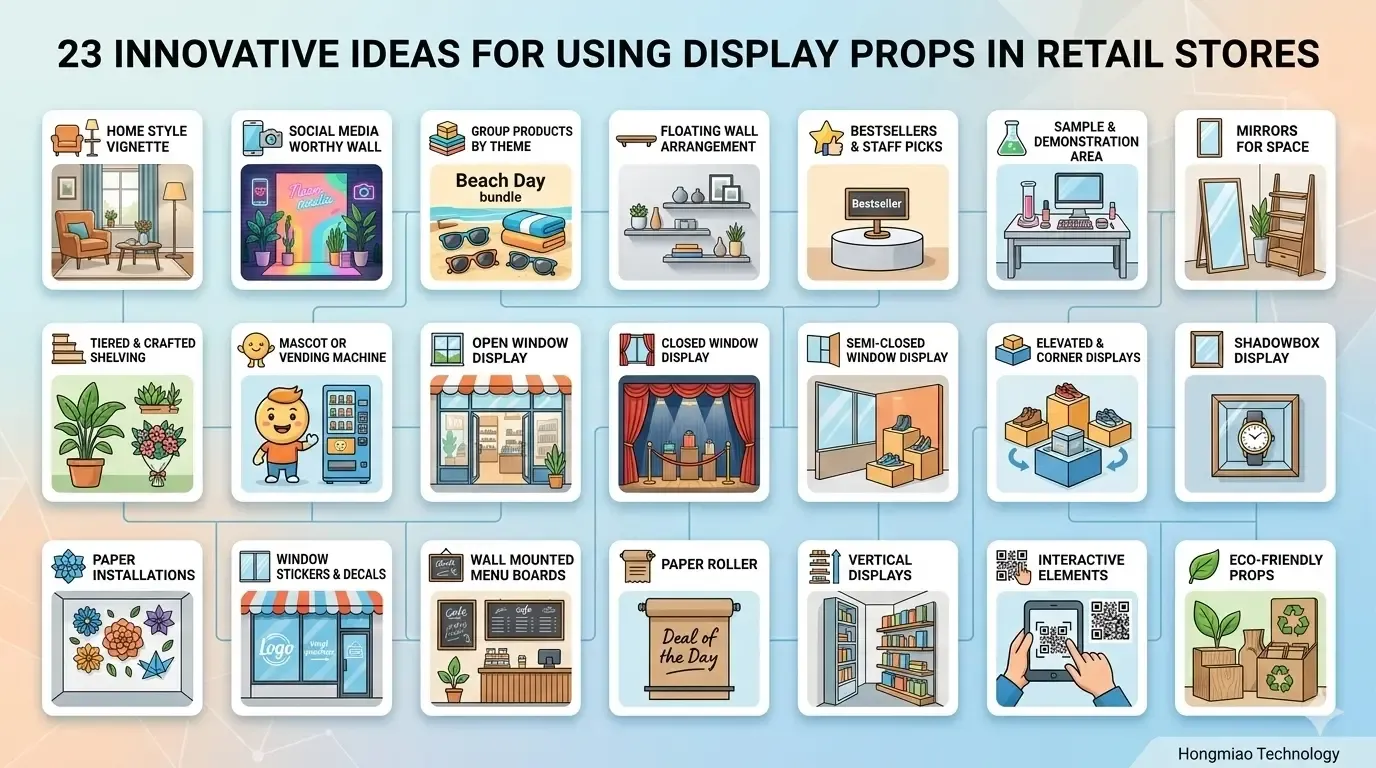
7. 23 Innovative and Creative Ideas for Using Display Props in Retail Stores
To stay ahead of other shops, you need to be very creative with your display props. Here are many unique ideas that can make your store look amazing and help you sell more products.
7.1. Use a Home Style Vignette
A vignette is a small scene that looks like a real-life setting. For example, if you sell furniture, do not just put a chair on the floor. Use a rug, a small side table, and a lamp as props to make it look like a real living room. This lifestyle setup helps customers imagine how the product will look in their own home.
7.2. Design a Social Media Worthy Wall
Nowadays, people love to take photos for Instagram or TikTok. You can create a beautiful wall with a colorful backdrop or neon signs. When customers take selfies in front of your display, they share your brand with their friends online for free. This is a great way to get more people to know about your retail business without spending on ads.
7.3. Group Products by Occasion or Theme
Instead of putting all shirts together, try grouping items by an event. For a "Beach Day" theme, you can put hats, sunglasses, and towels together on one display. This makes it easy for the customer to buy everything they need for that specific occasion in one go.
7.4. Floating Wall Arrangements for a Modern Look
Floating shelves give a clean and airy look to your store. They are perfect for showing small decor items or shoes without making the wall look crowded. This minimalist style is very popular in modern stores because it keeps the focus entirely on the product.
7.5. Highlight Bestsellers and Staff Picks
People often buy what others are buying because they trust the choice. Use small tabletop signs or clear acrylic stands to highlight your "Bestsellers." You can also have a "Staff Picks" section where your employees recommend their favorite items. This builds trust and helps the customer make a quick decision.
7.6. Create a Sample Station or Demonstration Area
Letting customers touch and try the product is a powerful way to sell. Use props like product trays or small counters to create a sample station. For example, a beauty store can have testers of creams. A gadget store can have a phone that people can use. This hands-on experience makes a person more likely to buy.
7.7. Use Mirrors to Enhance Space and Light
Mirrors are wonderful props for small shops. If you place large mirrors near your displays, they make the space feel much larger and brighter. Mirrors reflect the light from your lamps and help customers see the products from different angles.
7.8. Use Tiered and Crafted Shelving
Do not use flat shelves for everything. Use tiered shelving to create a visual hierarchy. This means putting some items higher and some lower. You can also use pegboards to hang items. This variety makes the display more interesting for the eyes.
7.9. Incorporate Plants and Flowers
Adding green plants or colorful flowers as props adds life to your display. It adds a nice texture and makes the store feel fresh and natural. This works very well for brands that sell organic food, skincare, or summer clothing.
7.10. Use a Mascot or Vending Machine
For a playful and fun store, you can use a mascot or a themed vending machine as a prop. These interactive elements make children and adults happy. It creates a whimsical atmosphere that people will remember for a long time.
7.11. Set Up an Open Window Display
An open window display lets people see the whole interior of the store from the outside. This is a very welcoming effect. It tells the people on the street that the store is open and has many beautiful things inside.
7.12. Create a Closed Window Display
A closed window display has a full back wall. This allows you to create a theatrical or dramatic scene. It is perfect for high-end fashion brands that want to create a specific story without the background of the store distracting the viewer.
7.13. Use a Semi-Closed Window Display
This type of display has a partial back wall. It gives you a focal point to show your main products but still lets some natural light enter the store. It is a great balance between a private display and an open shop.
7.14. Elevated and Corner Displays
Use platforms or risers in the corners of your store. This varies the height and perspective of your layout. When a product is on an elevated platform, it naturally looks more important than items on the floor.
7.15. Create an Island Display
An island display is a standalone fixture in the middle of the floor. Because people can walk all around it, it is perfect for "hero products" that you want to show from every side. It helps guide the traffic flow of the customers.
7.16. Shadowbox and Compartmentalized Displays
A shadowbox is a small framed box on the wall that holds one special item. It acts like a frame for a picture. This is perfect for small, delicate items like expensive jewelry or rare collectibles. It makes them look like a treasure.
7.17. Paper Installations and Banners
You do not always need expensive props. You can use paper flowers or geometric paper shapes to create a creative backdrop. This is a low-cost way to add a lot of color and art to your store walls.
7.18. Use Window Stickers and Vinyl Decals
You can put graphics, text, or brand logos directly on the glass of your window. These stickers tell the customer about sales or new arrivals before they even enter the store. It is a very effective way to use your window space.
7.19. Wall Mounted Menu Boards
For cafes or restaurants, wall-mounted boards are essential props. They show the prices and the menu clearly. You can use chalkboards for a traditional look or digital screens for a modern feel.
7.20. Use a Paper Roller or Studio Roller
A paper roller on the wall is a creative way to share brand messages. You can write the "Deal of the Day" or product info on it. When the message changes, you just pull the paper down and write a new one.
7.21. Vertical Displays for Small Spaces
When you have very little floor space, go vertical. Use tall wall shelves and even ceiling-mounted signs. This keeps the walking area clear but still allows you to show a large number of products.
7.22. Interactive and Multisensory Elements
A good display should engage more than just the eyes. Use testers, samples, or even QR codes that people can scan. When a customer interacts with a display, they stay in the store longer.
7.23. Choose Eco-Friendly Props
Many customers today care about the environment. Use sustainable materials like wood, recycled metals, or powder-coated aluminum. These props are durable and show that your brand cares about nature.
8. Essential Guidelines for the Maintenance and Upkeep of Display Props in Retail Stores
Props can get dirty or broken over time. A dusty prop makes the product look old and unwanted. You must have a plan to keep them clean.
Clean acrylic and glass props every day to remove fingerprints. Check the screws on metal racks to make sure they are tight. If a mannequin gets a crack or the paint comes off, you should fix it or replace it. Also, rotating your props every few months is a good idea. Moving a display to a new spot can make old customers notice it again.
9. Where and How to Source the Best Display Props for Your Business
Finding the right place to buy your props is just as important as choosing the design. You need to find a balance between the cost, the quality, and how fast you can get the items. Most retail store owners use three main ways to get their display materials.
9.1. Buying from Wholesale Suppliers and Large Manufacturers
This is the most popular way to get props if you want to save a lot of money. Wholesale suppliers sell items in large quantities, which is called bulk buying. When you buy many racks, hangers, or mannequins at once, the price for each item becomes much lower. This is the best option for new stores or businesses with a tight budget. Large manufacturers often have a huge variety of ready-made designs that you can choose from immediately. If you need a lot of props to fill a big store, going to a wholesaler is the smartest financial decision.
9.2. Hiring Custom Prop Makers for Unique Brand Identity
Sometimes, ready-made props do not match the specific vision of a brand. In this case, you should hire a custom prop maker. These are experts who can build a display from scratch based on your own drawings or ideas. If you want a specific shape, a unique color, or your brand logo printed on the stand, a custom maker can do it for you. This is very good for branding because no other store will have the same display as yours. It makes your retail store look very professional and exclusive. While this costs more money than buying wholesale, it helps you stand out from all your competitors.
9.3. Using Online Marketplaces and Global Trade Shows
The internet has made it very easy to find trendy and modern display props. Many websites and online marketplaces offer thousands of ready-to-use options. You can see photos, read reviews from other buyers, and compare prices from different sellers sitting in your office. This is a very fast way to get props if you are in a hurry. Besides online shopping, many retailers visit trade shows and exhibitions. These events allow you to see the latest trends in visual merchandising and meet the suppliers face-to-face. You can touch the materials like acrylic or wood to check their quality before you make a deal.
9.4. Selecting Props Based on Shipping and Delivery Time
When you are sourcing props, you must also think about how long it will take to reach your store. If you buy from an international supplier, it might take several weeks to arrive. If you have a grand opening next week, it is better to buy from a local supplier who can deliver quickly. Always ask about the shipping costs and the safety of the items during transport. Fragile props like glass cases or thin acrylic risers need very careful packing so they do not break on the way to your shop.
10. Final Thoughts on Using Display Props for Success
Display props are a vital part of a successful retail store. They act as the bridge between the product and the customer. By using different types of props like mannequins, shelves, and acrylic stands, a retailer can create a space that is organized and beautiful. These tools help increase sales by making products easy to see and reach. They also help build a strong brand image that people remember.
A good shop owner should always think about the material and safety of the props. Using creative ideas like different heights and good lighting can make a huge difference in how much people enjoy shopping. It is important to keep the displays clean and to change them with the seasons. When you invest in the right display props and arrange them with care, you create a shopping experience that makes customers want to come back again and again. Regular updates and smart selection of materials will keep your store looking modern and professional for a long time.
Looking for High-Quality Retail Display Props?
If you want to transform your store layout and boost your sales, choosing the right display tools is the first step. At Hongmiao Technology, we connect you with the best display props wholesale suppliers and manufacturers from around the world. Whether you need modern acrylic stands, sturdy metal racks, or custom-branded mannequins, you can find everything in one place.
Explore our wide range of retail display solutions today and create a shopping experience that your customers will never forget!
Explore Related Articles
- Common Mistakes Brands Make When Ordering Custom Window Display Props
- The Strategic Importance of a Reliable Window Display Props Supplier in Global Retail Sourcing
- The Art of Bespoke Retail: A Deep Dive into Custom Window Display Props for Iconic Branding
- Complete Guide To Customized Display Props For Retail Stores and Brands
Featured Articles
Two suppliers quote you the same design, the same 200 signs. One lands at $11,000. The other at $18,500. Both call th...
READ FULLWholesale is no longer a promise; it's a price tag. Put it into any B2B marketplace, and you'll receive a deluge of l...
READ FULLAn order for a large neon sign carries a different kind of risk than that of a sign for your shop window. A poor supp...
READ FULL