




Common Mistakes Brands Make When Ordering Custom Window Display Props
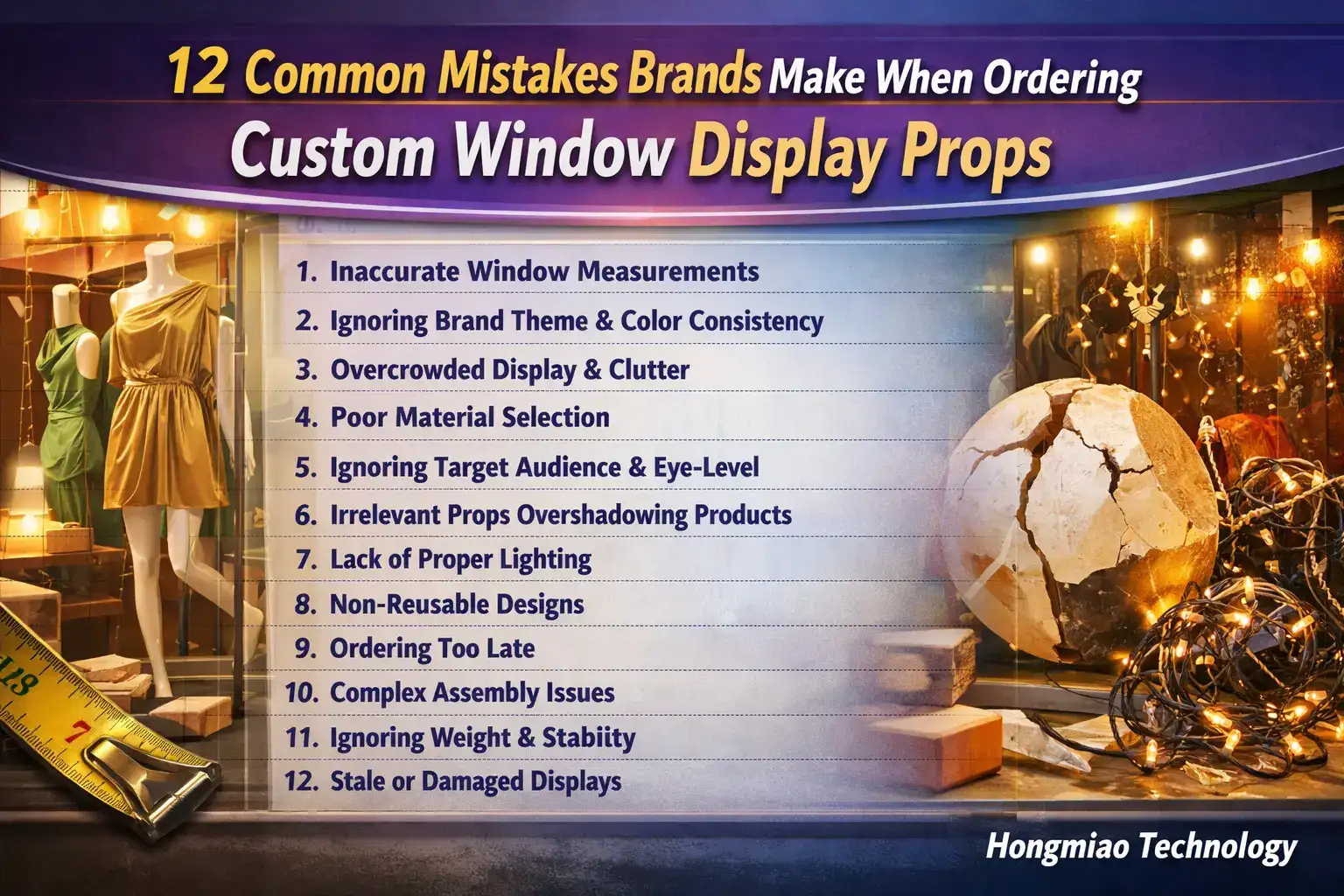
Your storefront window is the first thing a customer sees before they decide to enter your shop. It acts like a silent salesman that works for you 24 hours a day. When a brand uses high-quality window displays, it creates a strong first impression. People judge the quality of your products based on how you present them in the street. Custom props are the heart of visual merchandising because they tell a story about your brand. If these props look cheap or do not fit the theme, people will walk past your store without looking. Many brands spend a lot of money on marketing but forget that the physical window is their best tool for conversion.
By avoiding common errors, you can make sure your store stands out from the crowd. Using retail custom window display props allows you to show your unique identity and attract the right target audience. When you plan your display correctly, you increase foot traffic and improve your overall sales. This guide explains why these mistakes happen and how you can fix them to get the best results for your retail space.
Top 12 Mistakes to Avoid When Designing Custom Window Props
Every brand manager wants a perfect window, but small errors during the design phase can lead to big problems. If you understand these 12 common mistakes, you can save your investment and create a display that actually sells your products.
1. Inaccurate Window Measurements
The biggest mistake is not measuring the window space correctly. If a prop is too large, it makes the window look crowded and messy. If it is too small, the display looks empty and weak. You must measure the height, width, and depth of your window area before you talk to a manufacturer. Do not forget to account for the glass thickness and the space needed for lights. A prop might look great on a computer screen, but it must fit the physical reality of your shop. Always provide a 3D sketch or a floor plan to the prop maker. This helps them understand how much room they have to work with. If the prop blocks the entrance or touches the glass, it loses its professional look.
2. Ignoring Brand Theme & Color Consistency
Your window must match your brand identity. Some brands choose colors that look "cool" but do not match their logo or packaging. This confuses the customer. If your brand is luxury, use elegant colors like gold, black, or deep blue. If you sell children's toys, use bright and happy colors. When the colors in the window do not match the colors inside the store, the customer feels a disconnect. Use a specific color palette for every season. This makes your brand look organized. Keep your theme consistent so that people recognize your store from a distance.
3. Overcrowded Display & Clutter
Many people think that putting more items in the window will attract more customers. This is wrong. A cluttered window makes it hard for the eye to focus on the main product. You should follow the "less is more" rule. Focus on one or two main products and use props to support them. Space between objects is just as important as the objects themselves. This empty space helps the brain process what it is seeing. If you fill every inch with props, the customer will feel overwhelmed and walk away. A clean and focused display looks more expensive and high-end.
4. Poor Material Selection & Low Quality
The material you choose for your props says a lot about your brand value. If you use cheap plastic that shines too much under the sun, your products will look cheap too. Some materials fade when they sit in the sun for a long time. This is why you must choose UV-resistant materials for windows that face the street. Wood, high-quality acrylic, and textured fabrics are good choices for many themes. Avoid materials that scratch easily or look like they are made of paper. High-quality materials last longer and keep their shape. When a prop starts to bend or peel, it ruins the entire image of your shop.
|
Material Type |
Best Use Case |
Durability |
|
Acrylic |
Modern and sleek looks |
High (but scratches) |
|
Wood |
Rustic or natural themes |
Very High |
|
Foam/Polystyrene |
Large shapes and 3D letters |
Medium (can dent) |
|
Metal |
Industrial or luxury styles |
Very High |
5. Ignoring Target Audience & Eye-Level
You must design your display for the person walking on the sidewalk. A common mistake is placing the most important item too high or too low. Most adults look at things that are at their eye level. If you are selling to children, the props should be lower. Think about the height of the average person in your area. If your store is in a mall, people might be looking from different angles. If your store is on a street, people might be driving by in cars. You need to place your props where they can be seen quickly. If a customer has to look down or up too much, they will miss your message.
6. Irrelevant Props Overshadowing Products
Props are there to help sell the product, not to be the star of the show. Sometimes, a brand orders a huge, beautiful prop that is so interesting that people forget to look at the shoes or clothes being sold. This is a waste of money. The prop should lead the customer's eye toward the product. Use lines and shapes that point to what you are selling. If the prop is more detailed or brighter than the product, you have a problem. Always ask yourself if the prop helps the product look better. If it is just there for decoration, it might be a distraction.
7. Lack of Proper Lighting Integration
Lighting is the magic ingredient in visual merchandising. Many brands design great props but forget how they will look at night or under bright sun. Without the right lights, your props can create dark shadows that hide the products. You should use spotlights to highlight specific areas. Avoid using lights that change the color of your products. For example, a yellow light can make a white shirt look old. Integrated lighting inside the props can also create a very modern look. Make sure your props do not block the ceiling lights of the window. A well-lit window attracts 20% more people than a dark one.
8. Choosing Non-Reusable or Single-Use Designs
Sustainability is very important for modern brands. If you order props that only work for one week, you are wasting resources. Try to design props that you can change or repaint for different seasons. For example, a set of white boxes can be used for a winter theme and then repainted green for spring. Choosing modular designs allows you to move parts around to create a new look. This saves you money in the long run. It also helps the environment because you are not throwing away large plastic items every month. Think about storage too. If a prop is one solid piece, it is hard to store for next year.
9. Ordering Too Late (Lead Time Issues)
Custom props take time to build. Many brand managers wait until the last minute to place an order. This leads to high shipping costs and low-quality work because the manufacturer is in a rush. Most custom prop makers need at least 4 to 8 weeks for production. You also need to think about shipping time. If your props arrive after the holiday season starts, you lose sales. Always plan your window displays three months in advance. This gives you time to fix any mistakes or make changes to the design.
10. Complex Assembly & Maintenance Issues
Some props look amazing in photos but are a nightmare to put together. If your store staff cannot assemble the display easily, they might break it. Or, they might put it together incorrectly, which makes it look bad. Always ask the manufacturer for an assembly guide. If a prop has many small parts, it will collect dust quickly. You need props that are easy to clean. If a prop needs a special battery or a complex plug, it might stop working after two days. Keep the mechanics simple so that your display stays looking fresh every day.
11. Ignoring Weight & Stability Constraints
The safety of your staff and customers is a priority. If a prop is very heavy, it might damage the floor of your window display. If it is too light, it might fall over when someone walks past or when the air conditioning turns on. You must consider the center of gravity of your props. Use heavy bases for tall items. If you are hanging things from the ceiling, check if the window structure can hold the weight. Falling props can break the glass or hurt a worker. Always verify the weight limits of your display area before you buy heavy statues or furniture.
12. Stale or Damaged Displays
A window display should change every 4 to 6 weeks. If you leave the same props for six months, people will stop noticing your store. They will think you have nothing new to offer. Also, props get damaged over time. Sun exposure can make colors look dull. Dust can make everything look old and dirty. If a prop is chipped or broken, take it out immediately. A damaged display tells the customer that you do not care about your business. Regularly check your window for any signs of wear and tear.
How to Avoid These Mistakes When Ordering Custom Window Display Props
You can avoid these problems by changing how you handle your procurement process. Following a set of steps helps you maintain high standards and keep your budget under control.
Create a proper briefing document
Start by writing a clear document that explains everything. Mention the exact size of your window. List the colors you want using Pantone codes. Describe the feeling you want to create. Do you want it to feel warm, cold, fast, or calm? Include photos of things you like. This document helps the manufacturer see your vision. When you give clear details, there is less chance of a mistake. Explain the goals of the display. Are you trying to sell a specific new item or just show your brand style?
Maintain clear communication with the manufacturer
Talk to your prop maker often. Do not just send an email and wait. Ask them about the technical limits of the materials they use. Sometimes, a design looks good but is impossible to build. A good manufacturer will give you advice on how to make the design stronger or cheaper. Confirm the deadlines and get them in writing. Ask who will be responsible if the prop arrives damaged. Clear talk prevents big surprises on delivery day.
Material sampling
Never order a large number of props without seeing a sample first. Ask the maker to send you a small piece of the material with the finish you want. This lets you see the real color and feel the texture. Sometimes a color looks different on a phone screen than in real life. Checking the sample helps you verify the quality. If the sample feels weak, you can ask for a better material before the bulk production starts.
Timeline planning
Create a calendar for your window displays. Mark the dates for design, approval, production, and shipping. Add a "buffer time" of one week. This extra week is for unexpected delays like bad weather or shipping issues. If you plan your timeline well, you will never have to rush. Rushing always leads to mistakes in the final product.
Test installation
If you are ordering props for many stores, do a test run in one store first. Set up the entire display and see how it looks. Check if the lights are right and if the props fit the space. Take photos and send them to the other store managers. This serves as a guide for them. A test installation helps you find small problems that you can fix before the full rollout.
Checklist Before Finalizing Your Order
Use this checklist to make sure you have covered all the important points. If you can answer "Yes" to all these questions, you are ready to place your order.
- Measurements verified: Did you double-check the width, height, and depth of the window? Make sure you also measured the door through which the prop must enter the store.
- Brand guideline match: Do the colors and the style of the props match your brand book? Check that the logos are the correct size and color.
- Material approval: Is the material strong enough for the weight of the products? Check if it is resistant to sun damage if your store gets a lot of light.
- Assembly test: Can one or two people put this together without special tools? If it is complex, did the maker provide a video or a manual?
- Lighting test: Will the props look good under your store lights? Make sure they do not create unwanted shadows on your main products.
- Budget & timeline confirmed: Does the total cost include shipping and taxes? Is the delivery date at least one week before your launch date?
Conclusion
Creating a beautiful window display is a mix of art and careful planning. When you avoid common mistakes like wrong sizing or poor material choice, you protect your brand's reputation. Your window is a powerful tool to turn people walking on the street into paying customers. High-quality displays show that you are a professional brand that cares about details. Using custom props gives you an edge over competitors who use generic decorations.
To get the best results, always focus on consistency. Your colors, themes, and lighting should all work together to highlight your products. Do not let the props take over the show. Instead, let them create a story that makes people want to see more. Remember to plan your timeline early so you have time for quality checks and test installations. A well-maintained and fresh window will keep your store looking exciting and relevant.
Ready to Upgrade Your Storefront?
Planning a great store window is hard work because you want your shop to look better than the rest. Hongmiao Technology helps you build high-quality displays that make people stop and look. We work with you to choose the right materials and colors for your brand. Our team knows how to create a display that stays strong for a long time without losing its shine.
You can start your project by talking to our design experts today. If you want to view our collection of custom window display props, our team is ready to help. You can see how we help brands grow their sales through better visual marketing and smart designs. Our production process is fast and we always deliver your order on time.
Featured Articles
Two suppliers quote you the same design, the same 200 signs. One lands at $11,000. The other at $18,500. Both call th...
READ FULLWholesale is no longer a promise; it's a price tag. Put it into any B2B marketplace, and you'll receive a deluge of l...
READ FULLAn order for a large neon sign carries a different kind of risk than that of a sign for your shop window. A poor supp...
READ FULL