




How Retailers Use Window Displays to Drive Foot Traffic and Sales
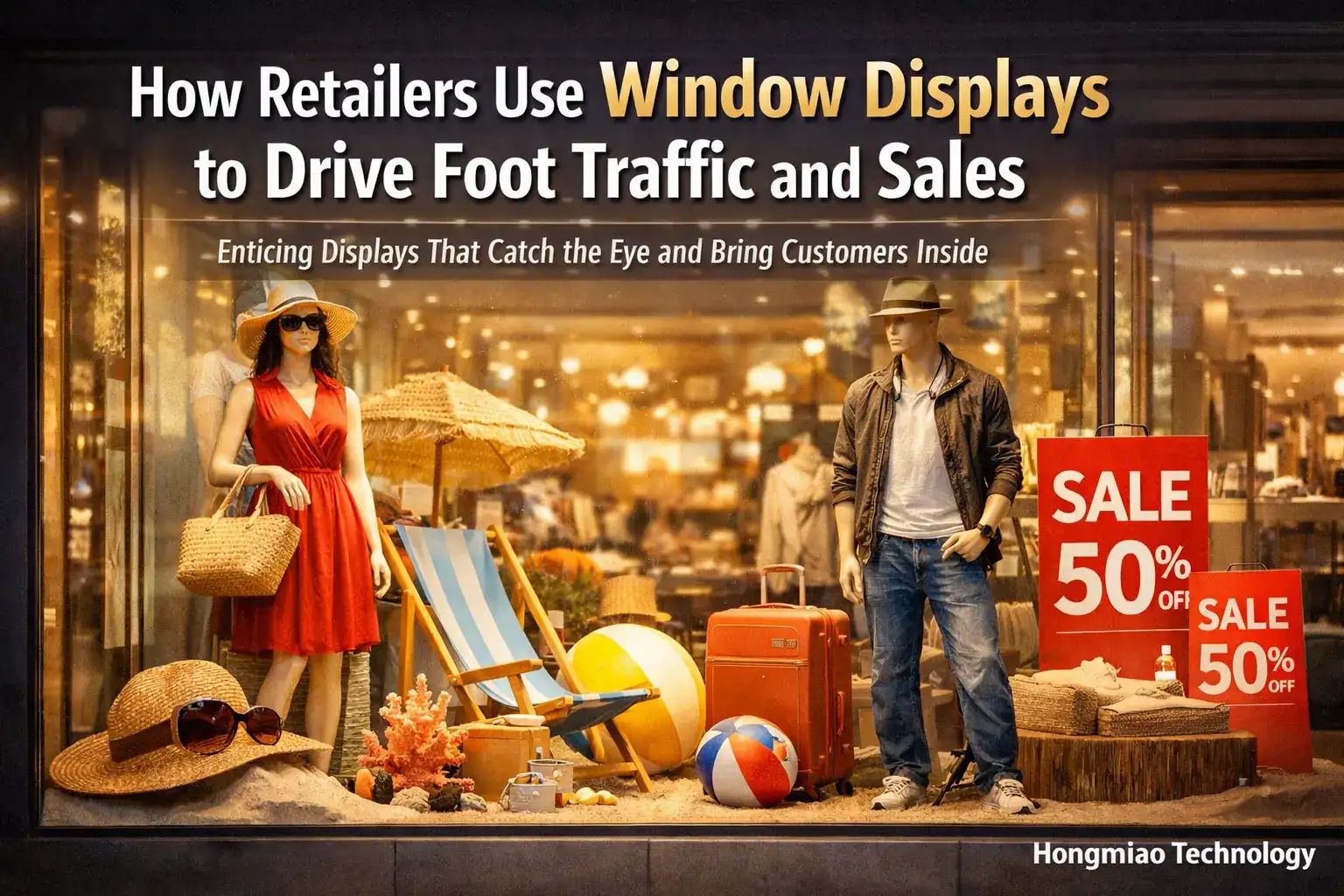
Walk past any busy shopping street and you will notice one thing right away. Some stores pull you in without even saying a word. You stop. You look. You want to go inside. That is the power of a good window display.
A window display is a curated scene that a store creates in its front window. It is the very first thing a shopper sees before stepping inside. According to research published by EUDL, 53% of retail shoppers said a window display was the main reason they decided to walk into a store. That number alone tells you how important this tool really is.
Another study by POPAI found that 86% of shoppers said window posters and displays grabbed their attention the most compared to other in-store marketing. Yet the same research also found that nearly one-third of shoppers felt retailers were not using their window space well. That is a big missed opportunity.
Window displays are not just about making a store look pretty. They tell people what kind of store it is. They show off products. They create feelings. They build brand identity. They bring people inside. And once a shopper is inside, it becomes much easier to sell them things. This includes not just the item in the window, but other products too.
This guide covers every method retailers use when it comes to window displays. It covers everything from the different types of displays to lighting, color, seasonal changes, technology, small store tricks, sustainability, and how to measure if a display is actually working. Whether you are a store owner, a visual merchandiser, or just curious about how retail works, this guide has everything you need. When done right, great window display props for retail stores turn a plain glass window into a 24/7 sales tool and brands like Hongmiao Technology help retailers get exactly the right props and fixtures to make that happen.
1. Types of Window Displays Retailers Use
Not all window displays are built the same way. Retailers pick different types based on what they sell, how big their storefront is, and what kind of feeling they want to create. Here are the main types you will find in retail stores around the world.
Open Window Displays: This type has no background wall or backdrop behind the products. When you look at the display, you can see straight through into the store. Open displays work great for retailers who want shoppers to see the store's interior and feel invited in. The display itself blends into the store space and makes the whole frontage look open and welcoming.
Closed Window Displays: These have a solid backdrop or wall behind the products. The display is like its own little room or stage. High-end fashion stores and luxury brands love this format because it puts full focus on the product. Nothing behind it competes for attention. Velvet backdrops, layered backgrounds, and LED-lit shelving are common here.
Semi-Closed Window Displays: This is the middle ground. There is a partial wall or half-height barrier behind the display. Shoppers get a hint of the store inside, but the products still have their own dedicated frame. This format suits a wide range of retail types because it gives structure without feeling too closed off.
Shadowbox Displays: Think of a shadowbox like a deep frame for one or two very special products. The product sits inside a narrow, boxed space with very focused lighting. Luxury watch brands are famous for this. A single watch on a velvet plinth is softly lit from behind. The idea is to make one product look like a museum piece. Less is more here.
Corner Window Displays: Stores located at street corners have two glass faces instead of one. Corner displays take advantage of this by creating something viewable from two different angles at the same time. These are great for drawing the attention of people walking from either direction.
Island Window Displays: These are freestanding setups placed in the center of a large storefront opening. Shoppers can walk around them and see the display from every angle. Flagship stores and big department stores use island displays when they want to make a dramatic statement. The display becomes a centerpiece all on its own.
The type of display a retailer picks sets the tone for everything else. Once that structure is decided, the real creative work begins.
2. How Retailers Use Props and Theming to Tell a Story
Products alone rarely stop people on the street. What makes shoppers pause is a story. Retailers build stories inside their window using themes, props, and scenes that feel alive and interesting.
A theme is the starting point. It gives the whole display a direction. That direction could be seasonal. Examples include a beach theme in summer or a cozy fireplace theme in winter. It could be event-based, like a back-to-school setup or a Valentine's Day scene. It could also be tied to the brand's personality, such as vintage, modern, playful, or minimal.
The role of visual props: Props are the objects used to build the scene around the products. Mannequins are the most common prop in fashion retail. But creative retailers go much further. A skincare brand might hang oversized product tubes upside down with dried flowers pouring out of them. A kitchenware store might set up a full mock kitchen scene with pots, food, and a dining table. A gift store might use giant papier-mâché animals or oversized seasonal objects.
The quality and creativity of custom window display props for stores play a huge role in whether the display feels premium or cheap. Well-built, well-painted, and well-finished props signal to shoppers that the brand takes quality seriously. Poorly made props do the opposite.
Retail experts often suggest balancing the display with a two-thirds to one-third rule. Two-thirds of the space should be decoration and scene-setting. One-third should be the actual merchandise. Too many products crammed into a window make it look like a storage room. Too much decoration and the products get lost.
Storytelling that unfolds: Some retailers create displays where the story continues as you move past the window and into the store. You see the beginning of a narrative in the window and feel pulled inside to see how it continues. This technique is powerful because it gives the shopper a reason to keep moving forward.
The surprise element: Unexpected props and unusual objects are a great way to stop people who might normally walk past without looking. A gift store owner in Portland once put giant lockets made from muslin and heavy chains in her window. People stopped. They took photos. They came inside. The element of surprise works because the human eye is naturally drawn to things it does not expect to see.
Real-life scenarios are also very effective. Show camping gear set up like an actual campsite. Show kitchen gadgets being used in a real kitchen scene. When shoppers can see a product in a setting they recognize from their own life, it becomes easier to imagine owning it.
3. Lighting Strategies Retailers Use in Window Displays
Lighting is one of the most underrated parts of a window display. Many store owners spend a lot of time on props and themes but forget that lighting is what brings everything to life. This is especially true at night when the store is closed but the window is still lit up for people walking by.
There are two main types of lighting used in retail windows: ambient lighting and accent lighting. Ambient lighting fills the whole display space with general light. Accent lighting focuses on specific products or areas within the display to draw the eye exactly where the retailer wants it.
Spotlights and LED lightboxes: Spotlights pointed at the main product or focal point can create a dramatic effect. LED lightboxes are also popular because they produce bright, even, vibrant light that makes graphic backdrops and signs look sharp and colorful. These tools are very useful for highlighting a single hero product.
Warm vs cool lighting: Warm lighting (soft yellow tones) feels inviting and cozy. It works well for homeware, food, fashion, and lifestyle products. Cool lighting (white or blue tones) feels modern and clinical. It suits electronics, beauty products, and high-tech items. Retailers pick based on the mood they want to set.
Avoid lighting from directly above: Hanging lights straight over a product creates shadows underneath it, which makes the product look flat or dull. Instead, lighting should come from an angle. It can come from the side or slightly in front to give the product shape and dimension.
Silhouette backlighting: Placing a light source behind a product or mannequin creates a silhouette effect. This technique is dramatic and draws attention from far away. Fashion stores often use this for evening or formal wear displays.
Motion-triggered lighting: Some modern displays use sensors to activate lights when someone walks past the window. The display lights up as the person approaches and dims when they leave. This kind of movement grabs attention naturally and creates a sense that the store is alive even when nobody is physically there.
Good lighting does not have to be expensive. Even small changes. Adjusting the angle of an existing spotlight or adding one warm lamp to a corner can make a significant difference to how a display looks and feels from the street.
4. Color Psychology and Visual Balance in Window Displays
Colors are not just decoration. They carry meaning. They change how people feel when they look at a display. Retailers who understand color psychology use it to their advantage every time they design a new window.
Bold and high-contrast colors: Bright reds, electric blues, and sharp yellows are attention magnets. These colors are great for stores on busy streets where there is a lot of visual competition. The display needs to shout louder than everything around it. Lacoste used this effectively when they blacked out their windows with bold red before a new store opening. People noticed and talked about it.
Pastels and neutral tones: Soft pinks, light greens, and warm whites feel calm and approachable. These work well for baby stores, wellness brands, and boutique fashion shops that want to attract shoppers looking for a relaxed, comfortable experience. Luxury brands also use neutral tones such as beige, cream, and charcoal to signal quiet sophistication.
Brand color consistency: Colors in the window display should match the brand's overall color palette. If a brand uses navy blue and gold in all its marketing, those same colors should appear in the window. Consistency builds recognition. When shoppers see familiar colors, they feel a sense of trust and familiarity even before they know the store name.
Visual balance and negative space: A balanced display does not mean everything is perfectly symmetrical. It means nothing feels out of place. Products should be arranged at different heights to create movement and visual interest. Negative space. The empty areas around products helps the eye rest and focus. Too many objects crammed together make a display feel stressful. Breathing room makes it feel deliberate.
Colors that match the season: Orange and black for autumn and Halloween. Red and green for Christmas. Pastels for spring. Gold and warm tones for harvest season. Retailers who rotate their color palette with the seasons make their windows feel timely and relevant, which gives shoppers more reasons to keep looking each time they pass.
5. Seasonal and Event-Based Window Display Methods
Shoppers expect retail windows to change with the calendar. When a store keeps the same display up for months, people stop noticing it. When it changes with seasons and events, they look forward to seeing what is new.
Holiday and festival displays: Christmas, Eid, Valentine's Day, Diwali, Halloween. These are the peak opportunities for seasonal displays. Shoppers are already in a buying mindset during these times. A display that reflects the holiday creates an emotional connection and nudges them to shop now. Department stores like Harrods and Selfridges in London are famous for turning their windows into full theatrical productions during Christmas.
Season change displays: Spring, summer, autumn, and winter each have their own colours, textures, and product needs. A clothing store transitions from light summer fabrics to cozy knits. A homeware store moves from bright summer colours to warm autumn tones. Keeping the display in sync with what shoppers are thinking about based on the time of year makes the store feel current and relevant.
New store opening teaser displays: Before a store even opens, its windows can generate buzz. Covering the windows with branded colors or cryptic visuals creates curiosity. Shoppers notice it. They wonder what is coming. Lacoste did this with bold red windows before a new location opened, and it worked because people were talking about the store before it even had its first customer.
Local community events: Retailers who tie their displays to local events, charity drives, or community celebrations build a stronger bond with neighborhood shoppers. A display that references a local festival or a charity the store supports shows that the brand cares about more than just selling. That kind of connection is hard to buy with advertising.
Real-time data-driven seasonal updates: Real-time data-driven seasonal updates: In 2025, some brands have started using local data including weather conditions, trending social media topics, local events to decide what to show in their windows. A rainy week in the forecast might trigger a display focused on waterproof outerwear. A local sports team making news might inspire a themed display. This level of responsiveness keeps the window feeling fresh and connected to daily life.
6. Promotional and Sales-Driven Window Display Techniques
Window displays do not always have to be artistic. Sometimes their job is simple and direct: tell people there is a great deal inside. Promotional displays are built around creating urgency and pulling in shoppers who are motivated by price and value.
Bold sale signage: Clear, large, easy-to-read signs announcing a sale are one of the most effective things a retailer can put in a window. Phrases like "Limited Time Only," "Final Clearance," or "Exclusive Weekend Deal" create a sense of urgency. The shopper feels that if they do not go in now, they might miss out.
Best-selling and trending products front and center: Products that already sell well are safe bets for the window. If shoppers inside the store are already buying a specific item, putting it in the window brings more people in looking for the same thing. Retailers can use their point-of-sale system sales data to find out which products deserve a spot in the display.
New arrivals and hero products: Launching a new product? The window is the best place to announce it. A strong first look at something new creates excitement. Fashion stores do this every season. The new collection hits the window display before it even fully hits the shelves. The exclusivity and freshness of seeing something new is a pull that works on almost every type of shopper.
Cross-merchandising: This is when a retailer shows multiple related products together in one display. Instead of just showing a pair of shoes, show the shoes, a matching bag, and a belt. Instead of just a cooking pot, show the pot, a cookbook, and matching kitchen linens. Cross-merchandising helps shoppers envision a complete lifestyle or solution, and it often leads to higher average transaction values because people buy more than just the one thing they came in for.
Using signage smartly: Good promotional signage works with the display, not against it. Signs should be large enough to read from the street, positioned where the eye naturally lands, and written in simple words. A sign buried in the corner or printed in tiny font defeats the whole purpose.
7. How Retailers Use Technology in Modern Window Displays
Technology has completely changed what a window display can do. What used to be a static scene with mannequins and signs is now capable of moving, reacting, responding, and connecting to the internet. Retailers who use technology well create displays that people stop and photograph because this then spreads across social media for free.
Digital screens and LED displays: Large LED screens in the window can show video content, rotating product images, promotions, and brand stories. Unlike printed graphics, they update instantly. A retailer can swap out the entire visual without touching the window. Digital displays are especially useful for retailers who want to communicate multiple offers at the same time.
Augmented Reality (AR): AR allows shoppers to use their smartphones to see things that are not physically there. A furniture store could let a passer-by point their phone at the window and see how a sofa would look in their living room. A clothing brand could let shoppers virtually try on a jacket. This removes the hesitation many people feel before buying something they have not tried yet.
3D optical illusions and giant screens: Some brands have gone even further by installing enormous curved LED screens that create 3D visual illusions visible from the street. A giant sneaker that appears to burst out of the window. A wave of water that looks like it is about to crash through the glass. These displays stop everyone in their tracks and generate massive social media coverage.
QR codes in windows: A QR code printed on the window glass or a card inside the display gives passersby a direct digital connection. Scanning it might take them to a product page, a lookbook, a video, or a special offer exclusive to people who found the link through the window. Gucci used this approach to connect younger shoppers to an animated version of their window art through an app.
Motion-triggered and interactive displays: Motion-triggered and interactive displays: Sensors in the display detect when someone is standing in front of the window and trigger a change. Lights shift, video plays, products rotate. Interactive touchscreen setups let shoppers use the window itself as an interface. A sportswear brand increased shopper engagement by 45% when it used motion tracking to show different product features based on where viewers were standing.
AI-powered display decisions: Some retailers now use artificial intelligence to analyze which displays get the most attention, how long people stand and look, and which layouts lead to people actually walking in. This data then feeds back into the next display design. It turns gut feeling into measurable insight.
Technology in window displays does not have to mean a massive budget. Even a simple QR code printed on a card and placed in an existing display is a step toward connecting the physical window to the digital world.
8. Sustainability and Brand Values Through Window Displays
More and more shoppers care about where a brand stands on environmental and social issues. Window displays have become one of the ways retailers communicate those values without saying a word.
Research shows that 78% of global consumers feel environmental sustainability is important to them as shoppers. Another study found that 84% of customers said bad environmental practices would push them away from a brand. These are not small numbers. Retailers who use their windows to show their values are speaking directly to a very large part of their audience.
Eco-friendly materials and recycled props: Instead of buying new plastic displays, some retailers build their window scenes from recycled wood, reclaimed fabric, or upcycled materials. The display itself becomes a message about the brand's values. When shoppers see that a brand reused materials to build its window, it creates a sense of respect.
Sustainability as a campaign: Saks Fifth Avenue did something bold when they partnered with fashion collective Vetements and filled their window with nothing but a pile of donated and out-of-season clothes. It was a statement about overproduction in fashion. The pile grew bigger each day. People stopped, stared, and talked about it. It was controversial and powerful, which is exactly what strong brand storytelling looks like.
Sensory minimalism trend: In 2025, a growing trend called sensory minimalism has taken hold in retail window design. The idea is to use clean, simple spaces with very few elements where those elements engage multiple senses. Soft textures, subtle background sounds, gentle fragrances near the window opening, and directional soft lighting. Nothing shouts. Everything invites. This approach works particularly well for wellness, organic, and premium lifestyle brands.
Community connection: Retailers who feature local charity campaigns, neighborhood events, or community initiatives in their windows build loyalty with the people who live nearby. A window that says "We support this local food drive" or "Come celebrate our neighborhood's anniversary" does more for community connection than any paid advertisement could.
9. Smart Window Display Methods for Small Stores
Having a small storefront does not mean having a weak window display. Some of the most memorable retail windows in the world belong to tiny boutiques and independent shops. Small space just requires smarter thinking.
Going vertical: When there is not much horizontal space, use height. Wall-mounted shelves at different levels, hanging signs, suspended products, and stacked elements all take advantage of vertical space. A boutique in Tokyo increased its display effectiveness by 40% just by creating a vertical arrangement that the owner called a "product waterfall" where items displayed top to bottom in a flowing visual line.
Mirrors and reflective surfaces: Placing mirrors inside a small display makes the space look twice as large. Reflective panels, metallic surfaces, and shiny backdrops create the illusion of depth. This technique is inexpensive and very effective.
Minimalist approach with one hero product: A small window with one beautifully presented product and a clear, bold sign can be just as striking as an elaborate large-store display. Luxury brand John Lobb designs minimal, gallery-style windows that showcase a single product like a piece of art. The emptiness around the product signals that the product is precious.
Transparent display cases: Glass or acrylic cases let shoppers see products without the display feeling cluttered. The case contains the item, focuses attention on it, and keeps the overall look clean and organized.
Modular and interchangeable displays: Small stores benefit greatly from display systems that can be rearranged easily. Adjustable shelving, stackable risers, and interchangeable graphic panels mean the store does not need to invest in an entirely new setup every season. Swap a few pieces and the whole window feels fresh.
A store in San Francisco named Cole Hardware has never spent more than $100 on a single window display. Yet their windows always get attention. They have used light bulb shaped carrots to create a farmers market scene. They built a full beach setting with real sand. Budget is not the limit because creativity is.
10. How to Measure If a Window Display Is Actually Working
Many retailers put a lot of effort into their window displays but never actually check if the display is helping the business. Measuring the impact of a display is just as important as designing it well. Without data, every decision is just a guess.
Foot traffic tracking: Count how many people walk past the store and how many actually come inside. Traffic counters at the entrance can give you this data automatically. Compare the numbers before and after a new display goes up. If more people are walking in, the display is doing its job.
Conversion rate: Of the people who walk in, how many actually buy something? This tells you whether the people the window is attracting are the right audience. A display that brings in lots of curious lookers but no buyers might need a different product or a different message.
Sales uplift on featured products: Track the sales of the specific products shown in the window display. If those items sell significantly more while they are featured, the display is directly contributing to revenue. If sales stay flat, the display might need to be redesigned around a different product choice.
Social media shares and photos: When people photograph a window and post it online, that is free marketing. Track mentions, tags, and shares related to your store. A display that generates social media activity has reach far beyond the people who physically walk past the store.
Customer feedback: Simply asking customers how they found the store or what made them come in is one of the most direct ways to know if the window is working. Train staff to ask at the checkout counter. The answers are often very revealing.
Dwell time: How long do people stop and look at the window before moving on? Longer dwell time usually means stronger interest. Some retailers use cameras with heat mapping or basic timer observations to measure this.
A/B testing: If a retailer has more than one window or location, they can run two different displays at the same time and compare which one performs better. This turns window design into a science rather than just an art.
Retailers who track performance consistently get better at display design over time. Each display teaches them something new about what their shoppers respond to and what they ignore.
11. How Often Should Retailers Change Their Window Displays
One of the most common mistakes retailers make is keeping the same window display for too long. A display that once turned heads becomes invisible after a few weeks. Regular shoppers stop seeing it because their brain learns to filter it out. New displays make people look again.
The minimum: Retail design consultants generally recommend changing a window display at least every one to two months. This keeps things fresh and gives regular passersby a reason to notice the store again.
The ideal: For stores in high foot traffic areas like busy city streets, shopping malls, tourist zones updating the display with each season or major shopping event is the sweet spot. That means roughly every four to six weeks during peak retail periods.
Budget-friendly rotation: Changing a full display every few weeks does not have to be expensive. One simple approach is to have a base layout that stays in place and then swap out one or two elements regularly. Change the background color. Swap the prop on the left side. Add a new sign. Small changes signal freshness without requiring a full rebuild every time.
Display fatigue is real: When a store keeps the same window for months, regular shoppers stop registering it entirely. Their eyes glide past it without pausing. A retail design expert summed it up simply: "The more often you change your windows, the more people will look at your store." It really is that straightforward.
Planning ahead: The best retailers plan their display calendar months in advance. They map out which season or event each display will match, what products will be featured, and what props will be needed. Planning ahead means they are never caught scrambling to put something together at the last minute, which almost always results in a weaker display.
Conclusion
Retailers who take their window displays seriously have a real advantage over those who do not. Every method covered in this guide. From choosing the right display type to using creative props, strategic lighting, smart color choices, seasonal updates, promotional tactics, technology, sustainable materials, small-space tricks, and performance tracking. All serve one clear purpose: getting more of the right people through the door.
A well-planned display is not just decoration. It is a brand statement. It communicates what a store is, what it sells, what it values, and why a shopper should walk inside rather than keep moving. When all these elements work together. The structure, the story, the lighting, the color, the timing. The result is a window that does real marketing work around the clock.
The details matter more than most people think. The quality of the props, the precision of the lighting angle, the freshness of the seasonal theme, and the clarity of the promotional message all combine to create a first impression that either pulls people in or lets them walk past. Consistency in updating the display keeps the store visible to regular passersby. Measurement keeps the strategy sharp over time.
Whether a store has a massive flagship window or a tiny boutique display, the same principles apply. Think about the audience. Build a story. Use the space wisely. Change it often. And always check if it is working.
Ready to Build Displays That Actually Bring People In?
If you are a retailer looking for high-quality props, fixtures, and display materials that bring your window concepts to life, Hongmiao Technology offers a professional retail display solutions with wide range of designed to help stores create standout storefronts. From structural display frames to custom-finished props, having the right materials makes every idea easier to execute. Every window more likely to stop the right shopper in their tracks.
Browse the collection and find what your next window display is missing.
Featured Articles
Wholesale is no longer a promise; it's a price tag. Put it into any B2B marketplace, and you'll receive a deluge of l...
READ FULLAn order for a large neon sign carries a different kind of risk than that of a sign for your shop window. A poor supp...
READ FULLCreating custom window display props requires a careful balance between visual appeal and structural durability. When...
READ FULL