




Neon Sign Pricing in Bulk: What US Buyers Really Pay
Two suppliers quote you the same design, the same 200 signs. One lands at $11,000. The other at $18,500. Both call themselves wholesale.
That gap confuses almost every first-time bulk buyer, and it should. A neon sign quote is not a price tag; it is a bundle of decisions, materials, tubing length, freight terms, and what got left out. Read it wrong, and the cheap quote wins on paper, then loses you money for a year.
This article breaks the number down: what actually drives the price, what US buyers really pay per unit, and which lines in a quote deserve a second look before you sign anything.
What Actually Drives the Price of Neon Signs in Bulk
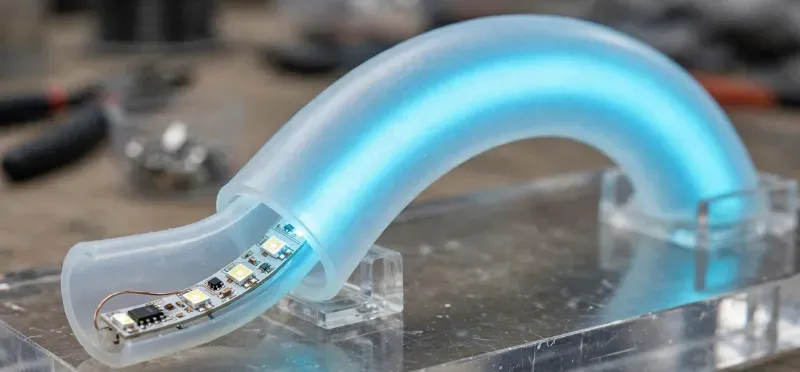
Start with the tubing, because that is where the money sits. Price follows the length of neon flex in the design, not the size of the board it sits on. A dense 24-inch script with tight curves burns far more tubing than a clean 24-inch logo, and suppliers who quote both at the same price are guessing, or cutting somewhere you cannot see.
Material is the second driver. Glass neon is handblown, fragile, and runs on high-voltage transformers. Silicone neon flex runs on low-voltage LEDs, survives ocean freight without arriving in pieces, and bends into the shapes modern branding asks for. For a bulk order that has to cross an ocean and then survive years on a wall, flex wins on practicality, not just price.
Then there is the LED quality nobody puts on the quote. Chip density and driver quality decide whether the sign glows evenly or develops dark spots and color shift within months. The backing matters too: acrylic that is not UV-stable yellows near a storefront window, and a contour-cut panel costs more to produce than a plain rectangle. Design complexity sits on top of all of it; every extra color, every tight curve, every separate letter is hand labor, and hand labor is never free.
At Hongmiao Technology, the signs are built with silicone neon flex on UV-stable acrylic backing, produced on the company's own line. No middleman takes a cut between the factory and your invoice, and that shows up in the per-unit number.
What US Buyers Actually Pay, by Size and Quantity
Buyers always ask for a price list. There isn't one, not an honest one. What exists is a range, and it moves with size and quantity more than with anything else. The figures below are typical market ranges, ex-factory, per unit, before freight and duties. They are guidance for reading quotes, not a price list from Hongmiao Technology.
| Sign size | 10 to 49 pcs | 50 to 199 pcs | 200+ pcs |
| Small (12 to 16 in) | $38 to 60 | $28 to 45 | $20 to 32 |
| Medium (20 to 30 in) | $95 to 150 | $75 to 115 | $55 to 90 |
| Large (36 to 48 in) | $230 to 380 | $180 to 290 | $140 to 240 |
Read the table the way a supplier reads it. The jump from the first column to the last is usually 35 to 45% per unit, and almost none of that is generosity. Setup, artwork prep, and programming cost the same whether the run is 10 signs or 200, so a bigger run simply spreads the fixed cost thinner.
One warning before you use these numbers. If a quote lands far below the 200+ column, do not celebrate. Ask what is missing.
The Costs That Never Appear in the Headline Price
Freight is the big one. Air freight runs roughly $5 to 9 per kg and gets your signs to the US in days; sea freight is far cheaper per sign but adds 25 to 40 days on the water. Neither figure is in the per-unit price you were quoted.
Duties sit outside the quote too. US import duty depends on how the product is classified and where it ships from, and rates change. A customs broker can confirm your rate in one email, send it before you commit, not after the container lands.
Then come the small lines that quietly add up. Power supplies typically add $3 to 8 per sign, dimmers $2 to 6, mounting hardware another $1 to 4. Plenty of quotes leave all three out, which is exactly how a $55 sign becomes a $70 sign by the time it is on your wall. And budget for spares: 1 to 3% extra units for transit damage and defects is normal. Get the replacement policy in writing while you are at it.
None of this makes a supplier dishonest. It makes the headline price the wrong number to compare.
Why the Same Sign Costs Less at 200 Pieces
Quantity is not a discount trick; it is arithmetic. Artwork prep, machine programming, and line changeover happen once per design. Across 10 signs, that fixed cost sits heavily on every unit. Across 200, it nearly disappears.
Which is why you should never accept a single price. Ask every supplier for three tiers: 10 to 49, 50 to 199, 200+, and watch how their numbers move. A supplier whose price barely drops at 200 pieces is not set up for volume, whatever the website says.
The channel matters as much as the quantity. A trading company or distributor buys from a factory and adds its margin, typically 15 to 30%, before the quote reaches you. Buying factory-direct removes that layer entirely, and it changes something else too: when a batch has a defect, you talk to the people who made it.
Hongmiao Technology has manufactured factory-direct since 2010, and its minimum order for neon signs starts at 10 pieces, so a buyer can test a design small and move up the tiers once it sells.
How to Compare Quotes Without Getting Burned

A real quote is itemized. If a supplier sends you one lump sum, that is not a quote; it is a number. Send it back and ask for the breakdown. A proper one lists, at minimum:
- Unit price at each quantity tier, not just your requested quantity
- Materials: neon flex type, acrylic thickness, and whether it is UV-stable
- LED specifications, not just the word "LED"
- Whether power supplies and dimmers are included in the price
- Packaging method and carton count
- Incoterms, and the freight cost stated separately
- Production lead time
- Payment terms
- The replacement policy for defective units
Then order a sample, built to the exact production spec, before the full run goes ahead. A sample that was made differently from production proves nothing. And if you are still narrowing down factories, our guide to choosing a supplier for large neon orders walks through the verification side of it: documents, factory checks, the questions that separate a manufacturer from a reseller. Hongmiao Technology manufactures its signs to CE, RoHS, and UL standards, as stated on hmtprops.com; whichever supplier you compare, make them name theirs.
7 Red Flags in a Suspiciously Cheap Quote
- The price sits 30% or more below every other quote. Somebody is cutting materials, or leaving costs out for later.
- No material specifications anywhere. "LED neon" with no mention of silicone flex, acrylic thickness, or UV rating tells you nothing at all.
- Power supplies and dimmers are missing from the quote. You will buy them later, at retail prices.
- Freight is "to be confirmed." An open-ended freight line means an open-ended final bill.
- The supplier wants 100% payment upfront. Normal terms split the payment between a deposit and a balance before shipment.
- No sample is offered, or the sample is clearly not built the way production will be. You would be approving something you will never receive.
- No certification documents for the exact model you are buying. If CE, RoHS, or UL paperwork cannot be produced on request, the claim is decoration.
One red flag is a question. Three is a decision.
Frequently Asked Questions
How much do neon signs cost when you order in bulk?
At 200 units or more, typical market pricing runs about $20 to 32 for a small sign, $55 to 90 for a medium,m and $140 to 240 for a large one, ex-factory. Smaller runs of 10 to 49 pieces cost roughly 35 to 45% more per unit. Always add freight, power supplies,s and duties before comparing.
What is the minimum order for volume pricing?
Hongmiao Technology takes neon sign orders from 10 pieces, which is low for this industry; many factories set minimums of 50 to 100 pieces per design. A low entry point lets you test a design in one market before committing to a full production run.
How do deposits and payment terms usually work?
The standard structure is a 30% deposit when the order is confirmed and the remaining 70% before shipment. Larger repeat orders sometimes negotiate the deposit down to 20 to 30%. Whatever the split, pay against a formal proforma invoice and use traceable methods such as wire transfer or escrow.
How long does production take on a volume order?
Standard production at Hongmiao Technology runs 2 to 4 weeks after artwork approval, with larger runs toward the longer end of that range. Add 5 to 10 days if a physical sample needs approving first, then add transit time on top before you promise a launch date to anyone.
What does shipping to the US add to the cost?
Air freight from China takes about 5 to 10 days at roughly $5 to 9 per kg. Sea freight takes 25 to 40 days to US ports and costs far less per sign, which is why it suits orders of 200 pieces and up. Ask for both options in writing, with Incoterms stated.
Ready to Find Out What Your Order Should Cost?
Stop comparing headline prices; they were never the real number. Send Hongmiao Technology your sign types, sizes, and quantities and get a bulk neon sign quote that you can check line by line against any competitor. Orders start from 10 pieces, standard production is 2 to 4 weeks, and you will know exactly what you are paying for before you pay it.
Featured Articles
Two suppliers quote you the same design, the same 200 signs. One lands at $11,000. The other at $18,500. Both call th...
READ FULLWholesale is no longer a promise; it's a price tag. Put it into any B2B marketplace, and you'll receive a deluge of l...
READ FULLAn order for a large neon sign carries a different kind of risk than that of a sign for your shop window. A poor supp...
READ FULL