




How Production Capacity Affects Large Neon Sign Orders
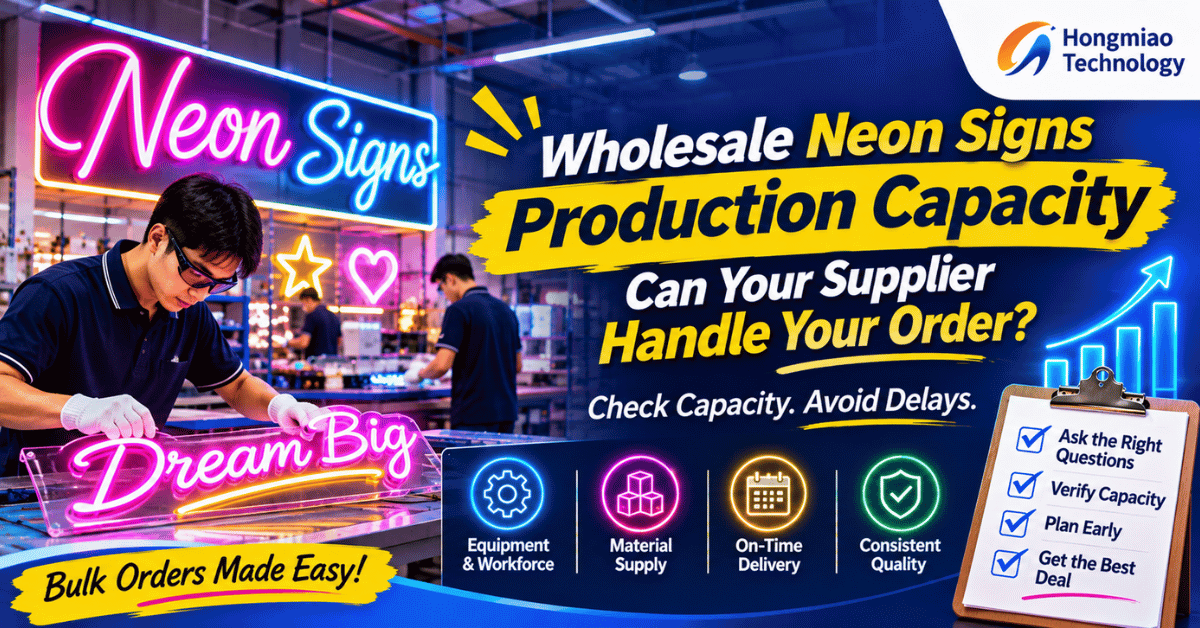
A supplier may confidently accept an order for 500 or 1,000 neon signs. But in actuality, can the factory actually handle that quantity on time without compromising quality? This is a common mistake bulk signage buyers make when evaluating signage suppliers. They focus on a supplier's willingness to accept the order rather than its ability to fulfill it.
That is where production capacity becomes important. It determines how efficiently a factory can manufacture and prepare large sign orders for delivery. Understanding this factor helps you assess supplier reliability, estimate realistic lead times, and avoid costly production delays. If you are new to this, our guide to bulk neon sign sourcing in 2026 explains the full process.
What Does "Production Capacity" Actually Mean?

Production capacity is the maximum number of units a factory can manufacture, test, and prepare for shipment within a specific timeframe while maintaining consistent quality. In neon sign manufacturing, it reflects the factory's equipment, workforce, production processes, and available resources. It is different from simply accepting a large order. A supplier must have the operational ability to fulfill it.
Why Does Capacity Matter More for Large Orders Than Small Ones?

A factory may handle small orders comfortably but struggle when production requirements increase. Large orders place greater demands on materials, labor, machinery, quality control, and scheduling. For buyers placing bulk neon sign orders, production capacity directly affects several purchasing considerations.
- Delivery schedules: A factory with sufficient capacity can allocate production resources more effectively and meet agreed deadlines. Limited capacity means extended lead times, particularly when several orders are being processed simultaneously.
- Product consistency: Large orders require continuous access to materials to keep production running. Here, factories with organized production processes are more capable of maintaining uniform quality across multiple units.
- Order fulfillment: A supplier must have enough equipment, workers, and materials to complete the entire order. Otherwise, the buyer may receive partial shipments or face unexpected delays.
- Production costs: Inefficient production can increase labor expenses, material waste, and operational costs. These expenses may eventually affect the buyer's quotation.
- Business continuity: Delayed signage can disrupt store openings, promotional campaigns, window display setups, and other commercial activities. That means production capacity is directly connected to the buyer’s operational planning.
What Happens When a Supplier Overpromises on Capacity?
When a factory accepts more orders than it can handle, several problems occur that disrupt production operations. Workers have to manage overlapping deadlines. The equipment has to operate beyond planned schedules, and quality inspections become rather hasty, leading to errors in quality standards. These problems also affect the delivery process. A buyer will experience delayed shipments and incomplete orders. That is why a low quotation and a confident delivery promise should never replace proper capacity verification. Understanding factory direct vs retail neon sign brands also helps you judge whether a quotation is realistic.
What Factors Determine a Factory's Production Capacity?
Production capacity is determined by several operational factors that are all linked to each other. A buyer only needs to have a basic understanding of a signage supplier's operating model to assess if they have a suitable production capacity or not. Let us take a look at what they are.
Manufacturing Equipment and Machinery
The number, type, and condition of production machines are a clear indicator of how quickly a factory can process materials for signs. Three things matter in this case. How modern the equipment is, how many units of machinery the supplier has, and whether they are well-maintained or not.
Workforce and Technical Skills

A factory needs enough trained workers to manage different manufacturing stages. In the signage case, these include design preparation, material processing, assembly, and finishing. Even a well-equipped facility experiences delays if it has a shortage of staff to accommodate the required production volume.
Raw Material Availability and Supply
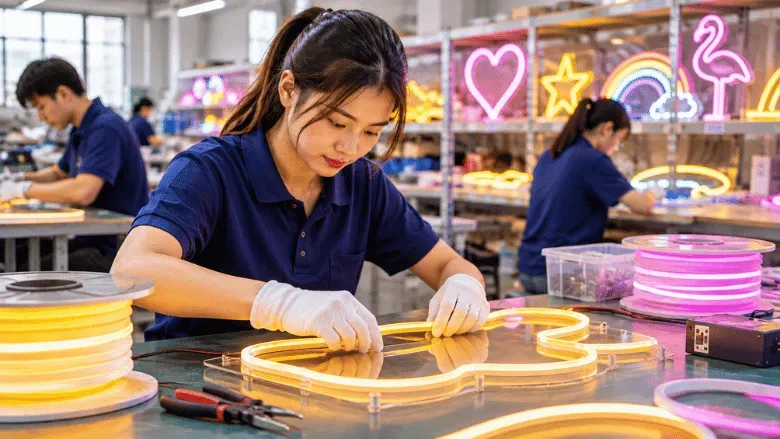
Smooth, disruption-free production depends on a steady supply of components like acrylic, LED components, wiring, and power adapters. Shortages or procurement delays, even when the factory has sufficient machinery and labor, only slow down the production pace. Many buyers also compare LED signs vs neon signs before finalizing materials and volumes.
Efficient Production Planning and Workflow
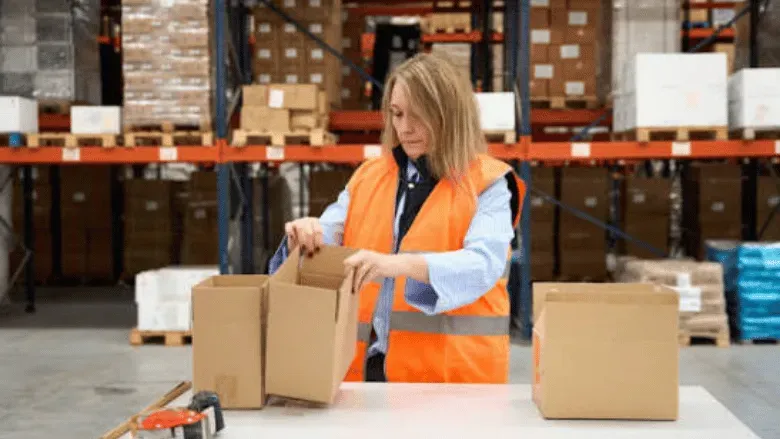
An organized production process helps factories manage different manufacturing stages. Poor planning in this aspect can create bottlenecks and cause delays between assembly, testing, and packaging.
Quality Control Practices

Quality inspections require time and resources. A factory must be able to inspect products throughout production and before shipment. If quality control cannot keep pace with manufacturing volume, defects may go unnoticed.
How Capacity Level Affects a Bulk Neon Sign Order
|
Capacity Situation |
Production Impact |
Potential Buyer Consequence |
|
High available capacity |
Factory can allocate sufficient resources to the order |
More predictable lead times and production scheduling |
|
Moderate available capacity |
Order requires careful scheduling alongside existing work |
Longer lead times or limited flexibility |
|
Limited capacity |
Machinery and workforce may struggle to meet demand |
Delays, incomplete shipments, and scheduling problems |
|
Overcommitted production |
Multiple orders compete for the same resources |
Higher risk of quality inconsistencies and missed deadlines |
|
Strong capacity with organized QC |
Production and inspection can progress together |
Better consistency across large quantities |
For your order, the important question is not simply how many signs a factory produces annually. It is how much production capacity remains available during your required manufacturing period.
How Can You Tell If a Supplier Has the Capacity for Your Order?
A signage supplier's production claims should be supported by practical evidence. Before committing to a large purchase, buyers should evaluate the following signals to see if the supplier can manage order fulfillment or not.
- By inquiring about monthly production output. Request the factory's average monthly production volume. But that is not sufficient. Proceed to clarify whether the figure represents actual output or is just the maximum theoretical capacity.
- Check existing order commitments. Ask how many orders are currently in production from different clients. This will give you an idea of whether the factory is capable of accommodating your required quantity within your timeframe.
- By requesting facility information. This involves doing a visual inspection of manufacturing equipment, production areas, and available quality control facilities.
- By confirming material availability. Ask whether the necessary components are already available or whether additional sourcing time is required.
- By requesting a production schedule. A reliable supplier should be able to explain the expected timeline for completing an order. This includes manufacturing, testing, packaging, and dispatch. Our step-by-step bulk order guide shows what to include in that request.
- By reviewing previous bulk orders. Ask for relevant examples of completed large orders, supported by production records or customer references where available.
You should also clarify what happens if production falls behind schedule. Agreeing on communication procedures and delivery expectations before payment reduces the risk of misunderstandings later.
Does Order Size Always Mean Longer Lead Times?
Not necessarily. Order quantity is only one factor affecting production time. Other factors that impact lead time are the factory's available capacity, existing workload, and manufacturing efficiency.
For example, a factory with modern and sufficient equipment, adequately trained staff, and available materials inventory can handle an order of 500 neon signs almost as efficiently as an order of 100. On the other hand, a smaller factory with limited resources will struggle to complete even 100 units within the buyer's preferred timeframe.
Custom and dynamic neon sign designs are another vital factor that affects production speed. An order containing several different sign shapes, dimensions, and specifications requires more preparation than a larger order involving standardized products.
That means buyers should ask about available production capacity, not just total order quantity. A supplier's ability to allocate resources during the required period is what matters.
How Does Seasonal Demand Affect Production Capacity?
Production capacity comes under increased load during peak demand season. At this time, even factories with substantial manufacturing resources may face limited material availability.
Several seasonal factors can influence production schedules:
- Holiday shopping periods.
- Promotional campaigns.
- Store openings and renovations.
- International purchasing cycles.
For bulk purchasers, to avoid problems during high-demand seasons, early planning is essential. Requesting production schedules well before peak demand gives suppliers more time to allocate materials.
Frequently Asked Questions
What Is Production Capacity in Neon Sign Manufacturing?
Production capacity refers to the maximum number of neon signs a factory can manufacture and prepare for shipment within a given timeframe. The production capacity figure depends on various factors like machinery, workforce, material availability, and production planning. To learn more, read about neon sign types, applications, and advantages.
How Does Production Capacity Affect Lead Times for Bulk Neon Sign Orders?
Production capacity determines the pace of production. A factory with sufficient capacity is able to allocate workers and equipment more effectively. Things that lengthen lead times are limited capacity, existing order backlog, and material shortages. Understanding the benefits of bulk ordering neon signs also helps you plan volumes and timelines around available capacity.
What Happens If a Factory Accepts More Orders Than It Can Handle?
When a factory exceeds its available production capacity, manufacturing bottlenecks develop. These lead to missed deadlines, incomplete shipments, inferior product quality, and unreliable delivery commitments from the supplier regarding order delivery dates. Buyers also face additional costs if delayed signage affects store openings or commercial projects.
How Can I Check If a Supplier Has Enough Capacity for My Order?
Buyers should request information about monthly production output, available machinery, workforce size, current order commitments, and material availability. They should also review previous bulk orders and request a realistic production schedule.
Does Ordering During Peak Season Affect Production Capacity?
Yes. Peak seasons often bring higher order volumes and increasing competition for factory resources. Even suppliers with substantial manufacturing capacity may have limited production slots available. Buyers should confirm current workloads and allow sufficient time for manufacturing and delivery.
Conclusion
A signage supplier's willingness to accept a large order does not guarantee its ability to fulfill it. What really makes the supplier capable is production capacity. For bulk signage buyers, evaluating this factor before placing an order can help them avoid numerous problems like production delays, unexpected costs, and supply disruptions. The focus should be on doing a comprehensive production capacity assessment. This means reviewing machinery, workforce, material availability, production planning, and quality control. Do not rely on production promises alone. Ask the right questions, verify available resources, and request a realistic manufacturing schedule. If you are planning a bulk order, contact our team to discuss capacity and timelines.
Featured Articles
Searching for neon signs online often brings up dozens of sellers advertising ...
READ FULLA supplier may confidently accept an order for 500 or 1,000 neon signs. But in actuality, can the factory actually ha...
READ FULLNeon sign artwork preparation is how you turn a design into a file a factory can bend, cut, and wire without guessing...
READ FULL