




The Best Materials For Bespoke Retail Window Displays
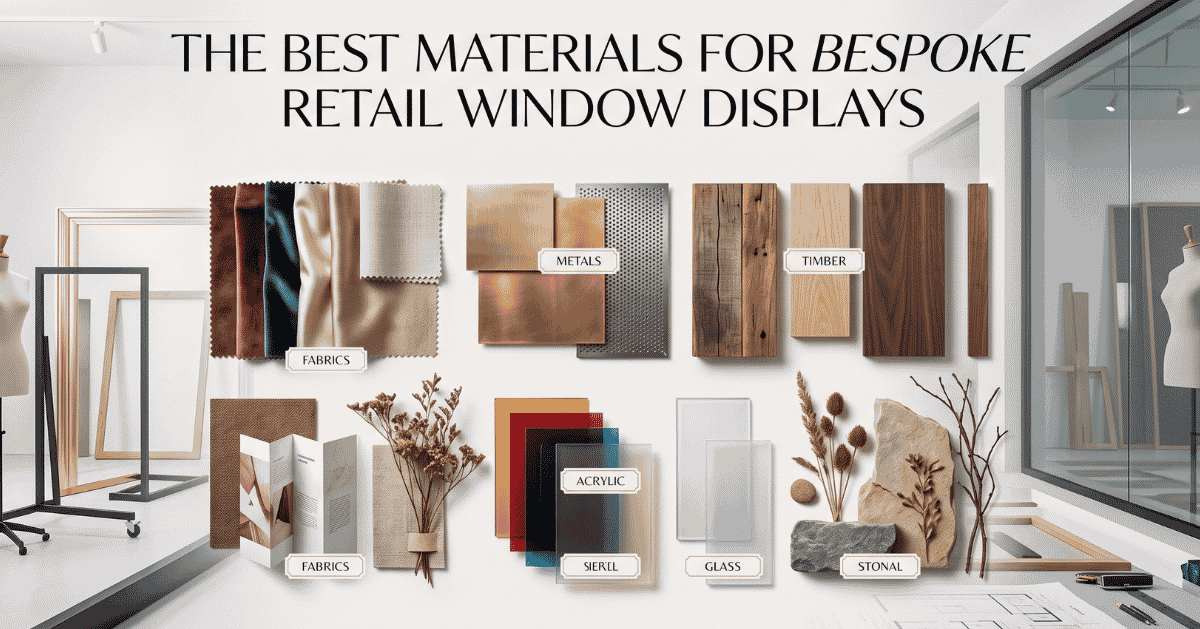
Creating custom window display props requires a careful balance between visual appeal and structural durability. When I talk to retail planners designing storefronts for busy streets like Fifth Avenue in New York or Rodeo Drive in Los Angeles, I start with the physical materials. No matter how impressive the visual concept looks on paper, the wrong substrate will warp in direct sunlight or chip during installation. I make it clear to every brand based in the USA that material choice directly affects a display's lifespan, shipping costs, and appearance. In the following breakdown, I will show you the exact materials we use to build bespoke retail window displays and explain how to choose the right substrates to showcase your apparel and leather goods. These materials withstand tough store conditions and keep your brand looking premium.
Retailers aim to make the most of their visual merchandising budgets without compromising on quality. I have spoken to brand managers considering whether they can save money by using cheap fiberboard or extruded plastics. That, however, is a huge risk. Although standard fixtures are easy to purchase, they tend to break down quickly under the continuous wear and tear of a retail floor. If you choose commercial-grade materials from the start, you will reduce replacement costs and ensure your window looks exactly as it did in the 3D rendering you approved.
What Are The Core Material Options For Customized Window Display Props?
The main material options for customized window display props include cast acrylic, powder-coated architectural metals, reinforced fiberglass, and industrial 3D-printed polymers. Retailers choose these four types because they offer a strong strength-to-weight ratio and maintain commercial-grade finishes. If you construct your displays using cheap MDF or ordinary glass, you end up with heavy shipping weights and a high risk of damage on the retail floor. Switching to commercial plastics and lightweight metals reduces freight costs and makes it easier for your visual merchandising team to install the displays.
I always advise choosing materials based on the actual weight of your goods and how long your retail campaign is expected to last. If you intend to keep a display in the window for six months, it must be made from UV-stable material. If you need to send it to fifty different store sites across the country, it must also be lightweight and shatterproof. Reaching these conclusions early helps you avoid costly logistical problems later.
Why Is Cast Acrylic A Top Choice For Leather Goods And Apparel?
Cast acrylic is preferred for leather goods and clothing because it offers better optical clarity than ordinary glass and is 50% lighter. I choose cast acrylic for high-end handbag risers, luxury shoe pads, and transparent shelving when the fittings need to disappear so the leather item looks like the only thing there. Unlike extruded acrylic, which is likely to crack under pressure, cast acrylic is ideal for laser cutting and edge-flame polishing. As a result, the custom window display accessories you get have clear, jewel-like edges that high-end customers expect to see at department stores such as Nordstrom and Macy's.
It is also highly resistant to yellowing, which helps solve a major problem when props are exposed to strong halogen track lighting. If you want a glossy, modern finish that resembles glass without the risk of shattering, cast acrylic is exactly what you need. Moreover, it readily accepts vinyl graphics and logos printed by silkscreen, letting you cleanly brand your risers without messy stickers that peel off when heated.
How Do Architectural Metals Improve Structural Stability?
Architectural metals improve structural stability with a solid framework that keeps heavy winter clothing or large backdrop panels from toppling over. When a client wants to hang heavy coats, display bulky denim, or build freestanding arches that span the full width of a storefront, I use tubular steel and lightweight aluminum. Aluminum is useful because it naturally resists corrosion and keeps total freight weight low for international shipping.
Since steel is cheaper and provides excellent load-bearing capacity, it is ideal for concealed internal frames. To complete these custom window display props, we use a baked powder coat. This process fuses dry paint powder to the metal with high heat, creating a hard surface that resists scratches from metal clothing hangers, zippers, and daily store activity. The result is a smooth, industrial look that still supports heavy loads without bending.
When Should You Use Fiberglass For Retail Displays?
Use fiberglass when your display designs need large organic shapes, oversized product replicas, or smooth curved surfaces. Examples could be huge perfume bottles, sculpted mannequins, or large holiday decorations featuring your main apparel range. Fiberglass is made by applying a liquid resin over a foam core, which hardens to form a tough, lightweight shell. I choose fiberglass for prominent displays because it accepts automotive-grade paint very well.
Choose fiberglass if your visual merchandising guide needs an exact Pantone color match with a high-gloss clear coat, since it provides that perfect surface. It endures the kind of physical abuse experienced in a busy retail environment better than fragile plastics. After the season has ended, you can store your customized storefront window displays and use them again the following year without being concerned about any structural deterioration. Although it is a little more expensive to mould at first, its long service life makes it a very economical option for annual seasonal events.
Can 3D Printing Replace Traditional Manufacturing Methods?
3D printing will not fully replace traditional manufacturing, but it greatly accelerates prototyping and enables detailed shapes that steel molds cannot produce. Industrial 3D printing is the best option when a company needs highly intricate and repetitive patterns or is producing a small run of bespoke retail window displays. Rather than spending thousands of dollars on a steel injection mold just for twenty pieces, you can print the items directly from a CAD file.
For large-scale retail installations that require thousands of identical components, injection molding is still the more effective way to keep costs under control. I rely on 3D printing mainly to create scale models before deciding on the final material. It also makes highly detailed accent pieces placed in the foreground of the window glass, where customers look closely. This bridges the gap between rapid design and final large-scale production.
Material Comparison Matrix For Window Displays
|
Material Type |
Weight Profile |
Durability |
Best Retail Use Case |
|
Cast Acrylic |
Medium-Light | High (Shatter-resistant) | Clear risers, luxury jewelry blocks, floating shelves |
|
Aluminum |
Lightweight | Very High (Rust-proof) | Hanging frames, tension fabric frames, overhead structures |
|
Steel Tubing |
Heavy | Extreme | Heavy apparel racks, hidden structural bases |
|
Fiberglass |
Medium | High | Oversized props, organic shapes, glossy painted elements |
|
3D Polymers |
Lightweight | Medium | Intricate details, prototypes, small-batch custom shapes |
How Does Sunlight Exposure Dictate Your Material Selection?
The amount of sunlight you get determines which materials you choose because direct UV rays and heat trapped behind storefront glass can make cheap plastics warp and printed graphics fade within a few weeks. I've seen shops ruin their whole visual merchandising budget by ordering custom display props made from low-grade PVC or unprotected foam core. During the summer months, the temperature inside a south-facing sealed retail window can easily go above 100 degrees Fahrenheit (38 degrees Celsius).
Heat can make inexpensive materials bend, and adhesives fail quickly; high-temperature automotive paints and thermally stable metals can withstand it. Investing an additional ten percent in materials can prevent you from replacing a melted display during your busiest sales season. Whenever your store is exposed to heavy afternoon sun, you should always request thermal ratings from your supplier.
What Are The Red Flags When Sourcing Custom Display Props Overseas?
The most serious warning signs when sourcing custom display props overseas are bait-and-switch tactics involving material substitutions, poor communication about load testing, and a lack of physical prototyping. When sourcing items in the United States or overseas for a U.S.-based brand, I advise buyers to watch for suppliers who promise cast acrylic but ship cheaper extruded acrylic, which is prone to cracking when you drill into it. Another major red flag is a factory that will not send a physical prototype before fulfilling the large order; you need to test the exact finish and load-bearing capacity before paying for full production.
When you're running a brand based in the USA, you must be sure the hardware supporting your leather products and heavy clothing won't break. Always ask the manufacturer for material data sheets and request photos of the raw steel tubing or raw fiberglass shells before they apply paint. A trustworthy manufacturer overseas will happily show you their internal production process. If a supplier refuses to answer your questions about material thickness or paint type, you should immediately look elsewhere. Although the lowest bid may seem attractive, it often ends up costing you twice as much when you have to rebuild the fixtures in the United States.
Frequently Asked Questions (FAQs)
What is the lightest material to use for large custom window props?
The lightest weight profile comes from combining aluminum framing with either taut fabric or hollow 3D-printed polymers. This lowers international shipping costs and lets one store employee move large displays without special equipment.
Can I mix different materials in one custom window display setup?
Yes, combining different materials creates a luxurious look. I usually use a heavy steel internal base for stability, coat it with lightweight fiberglass to achieve the desired shape, and then add clear cast acrylic shelves to hold the goods.
How do I clean acrylic custom window props without scratching them?
Use a microfiber cloth and a plastic cleaner such as Novus; do not use ammonia-based glass cleaners like Windex on acrylic, as the chemicals can cause the edges to craze and become cloudy over time.
Are these custom materials safe for international ocean freight?
Yes, as long as the manufacturer packs them correctly. High-quality custom props made from cast acrylic, metal, or fiberglass easily survive ocean freight when packed in custom-cut pearl cotton foam and reinforced wooden export crates.
Order Your Bespoke Store Fixtures From HMT Props
Building a dominant retail presence means you cannot rely on flimsy materials that warp and fade. At HMT Props, I know exactly what it takes to build commercial-grade displays. Tracing our roots to Shanghai Hongmiao Advertising Co., Ltd. in 2010, our factory integrates acrylic processing, 3D printing, injection molding, and custom metalwork under one roof. We control the raw materials and assembly, ensuring your display props arrive exactly as designed, on time, and ready for the retail floor.
You do not have to guess which material works best for your leather goods or heavy apparel. Our enterprise maintains consistent, efficient operations and strict quality control. Our production team guides you through the technical specs to match your exact budget and durability needs. Contact us at sr900222@163.com or browse HMT Props to start planning your next visual rollout. Protect your retail budget, speed up your store installations, and give your brand the premium physical presence it deserves.
Featured Articles
Creating custom window display props requires a careful balance between visual appeal and structural durability. When...
READ FULLIn today’s fast-paced B2B retail landscape, commercial neon signs have transformed from basic lighting into ess...
READ FULLA neon sign is a bright, hand-crafted light display that uses gla...
READ FULL